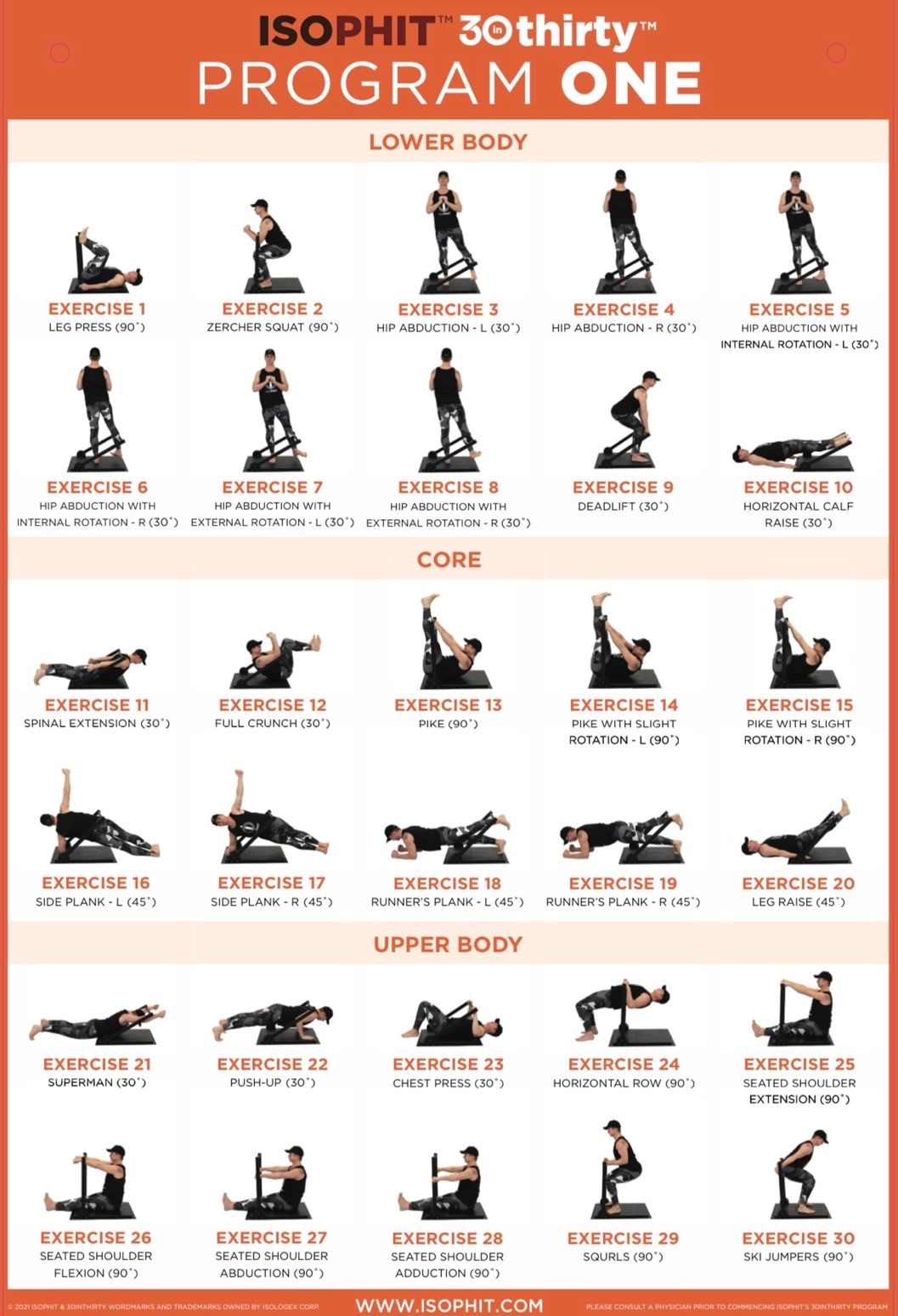
Why Isometric Strength Endurance Comes First: A System-Level Rationale for Whole-Body PIMA Training

Isometric training is often discussed as a single method, but this framing obscures the critical distinctions between how isometric force is produced and why those distinctions matter for performance, durability, and health. Treating all isometric contractions as equivalent overlooks the mechanical, neural, and tissue-level differences that ultimately determine training outcomes. When the objective is to build durable, precise, and transferable force capacity across joints and tissues, the method of isometric force production matters. Progressing isometric training through Isometric Strength Endurance using Pushing Isometric Muscle Actions (PIMA) at longer contraction durations and maximum descending intensity across the whole body provides a fundamentally different and more appropriate training stimulus than approaches that rely primarily on Holding Isometric Muscle Actions (HIMA). This is not an argument against HIMA, but rather a case for choosing the most suitable option when precision, fatigue management, tendon loading, and systemic integration are priorities.
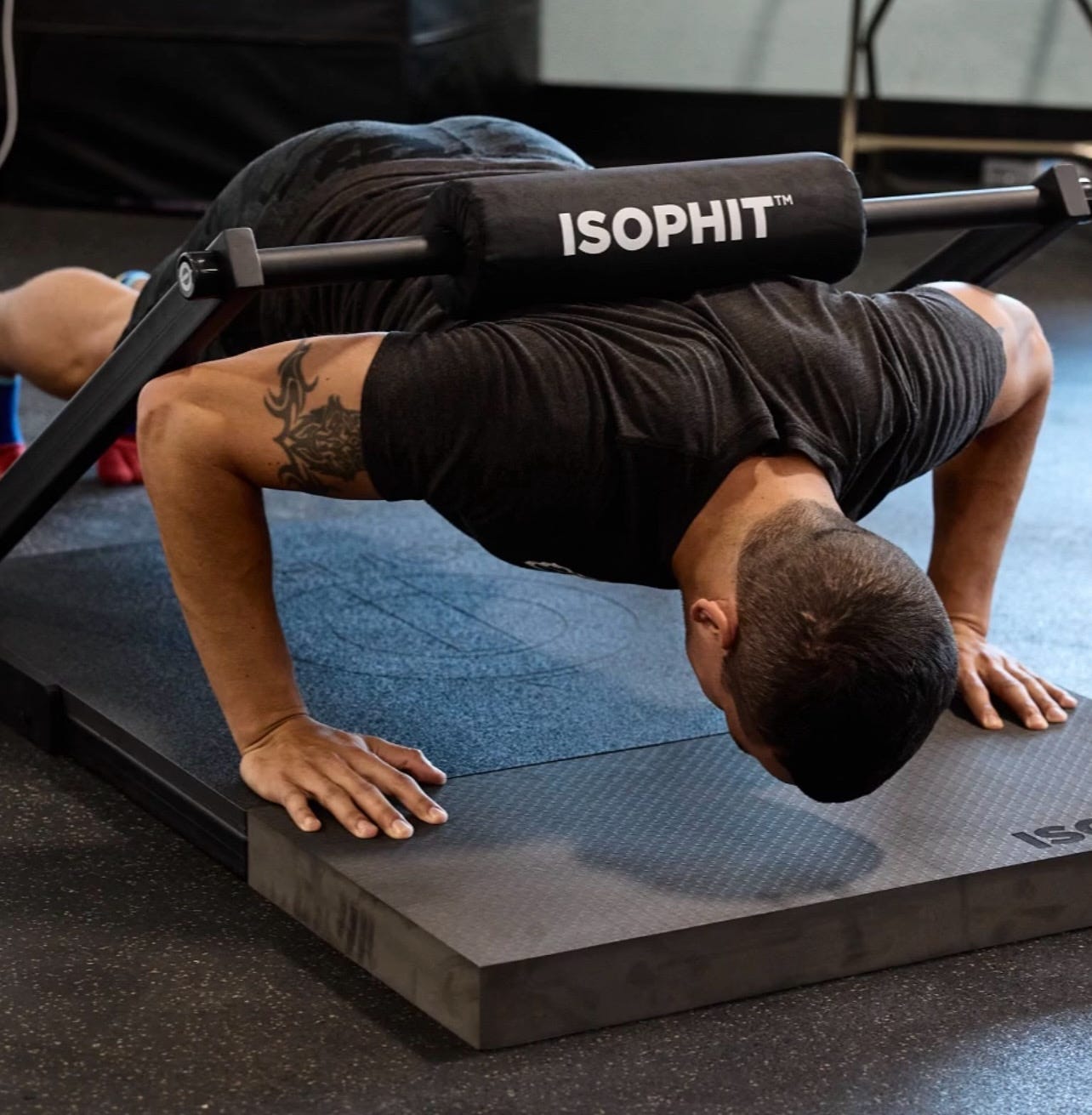
Isometric force production is not a static event. It is an active, continuously regulated interaction between the nervous system, musculotendinous tissues, skeletal leverage, and external constraints. The athlete is not “holding still,” but actively generating force, adapting to fatigue, and stabilizing joint systems in real time. This distinction is critical because sport is governed less by peak expression of force and more by the ability to tolerate, regulate, and reapply force under fatigue and time pressure. Isometric strength endurance directly addresses this requirement by exposing whether force can be sustained, whether coordination degrades as fatigue accumulates, and whether tissues can tolerate repeated internal loading without loss of control. Longer contraction durations reveal limitations that short maximal efforts cannot, forming the foundation upon which more explosive expressions of strength are built.
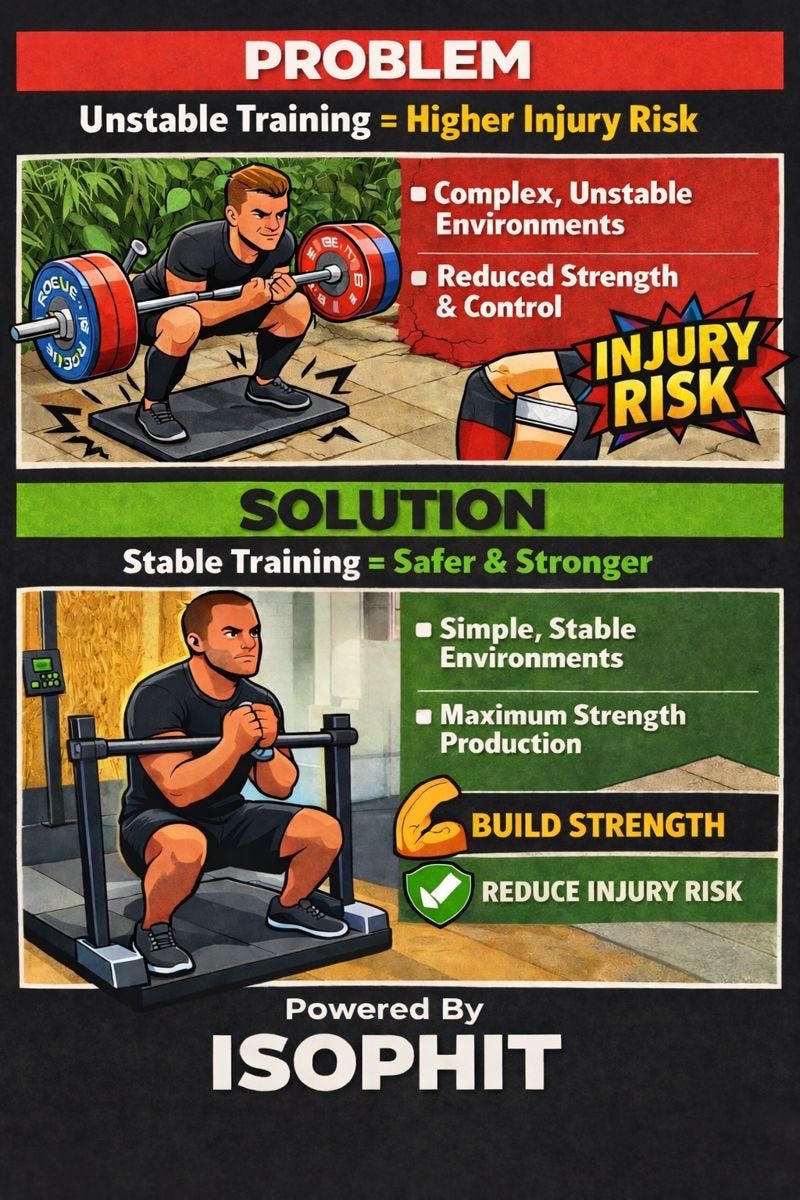
The most meaningful distinction between PIMA and HIMA lies in how load behaves as fatigue develops. With PIMA, the athlete pushes against an immovable or externally constrained object. As fatigue accumulates, effective force output naturally declines while maximal intent is maintained. The system self-regulates, allowing joint stress to decrease as capacity diminishes. In contrast, HIMA requires the athlete to resist an externally imposed load, most often governed by gravity. As fatigue increases, that same external load represents a progressively greater percentage of the athlete’s remaining capacity, elevating relative stress on joints and tissues and increasing the likelihood of compensation, positional breakdown, or abrupt failure. From a durability and risk-management perspective, this distinction is fundamental.
PIMA also provides a more stable and controllable environment for force production. Because the athlete determines the direction, vector, and intent of the force, greater precision in joint positioning and muscular targeting can be maintained throughout the contraction. HIMA is inherently less stable, with force direction dictated by gravity or the external load. As fatigue sets in, even small alignment errors become magnified, reducing the athlete’s ability to maintain precise joint angles or consistent tissue loading. When training isometric strength endurance, the goal is not simply to endure the contraction but to preserve quality force production from start to finish. Stability and precision are therefore not secondary considerations, but central requirements.
The ability to target specific tissues further differentiates PIMA from HIMA. By controlling joint angles and force vectors, PIMA allows practitioners to deliberately bias particular muscles or tendon regions. Tendons, in particular, respond best to localized, sustained mechanical strain rather than generalized loading. HIMA distributes load according to leverage, gravity, and compensatory strategies, which can dilute tissue-specific stimulus. While this global loading can be useful in certain contexts, it is less effective when the objective is precise tendon strengthening or reconditioning. This distinction reinforces why PIMA is often the more appropriate choice when tissue adaptation is the primary goal.
Isometric strength endurance must be developed across the entire body rather than confined to the lower limbs. Sport is a whole-system event in which force is generated, transmitted, and expressed through linked segments. Breakdowns rarely occur in isolation. Deficits in the upper body, trunk, or cervical spine compromise the athlete’s ability to preserve their center of mass during rapid change of direction, deceleration, and reacceleration. Even athletes who demonstrate high levels of lower-body strength may struggle to maintain positional integrity under dynamic conditions if these regions lack sufficient isometric force capacity. The result is energy leakage, delayed force application, and increased injury risk.
The cervical spine plays an especially underappreciated role in this system. Although the head represents a relatively small portion of total body mass, its position has a disproportionate influence on whole-body mechanics. During movement, forces acting on the head can reach up to two times the magnitude of those experienced at the center of mass due to its position atop a multi-segment lever system. This relationship can be understood through the analogy of a rolling wheel without slipping, in which rotational and translational motion must remain synchronized to maintain efficiency. When cervical and trunk isometric force capacity is insufficient, the system loses synchronization. Control deteriorates, timing is disrupted, and compensations emerge elsewhere in the kinetic chain. Whole-body PIMA training reinforces the structural and neural integrity required to maintain this synchronization under load.
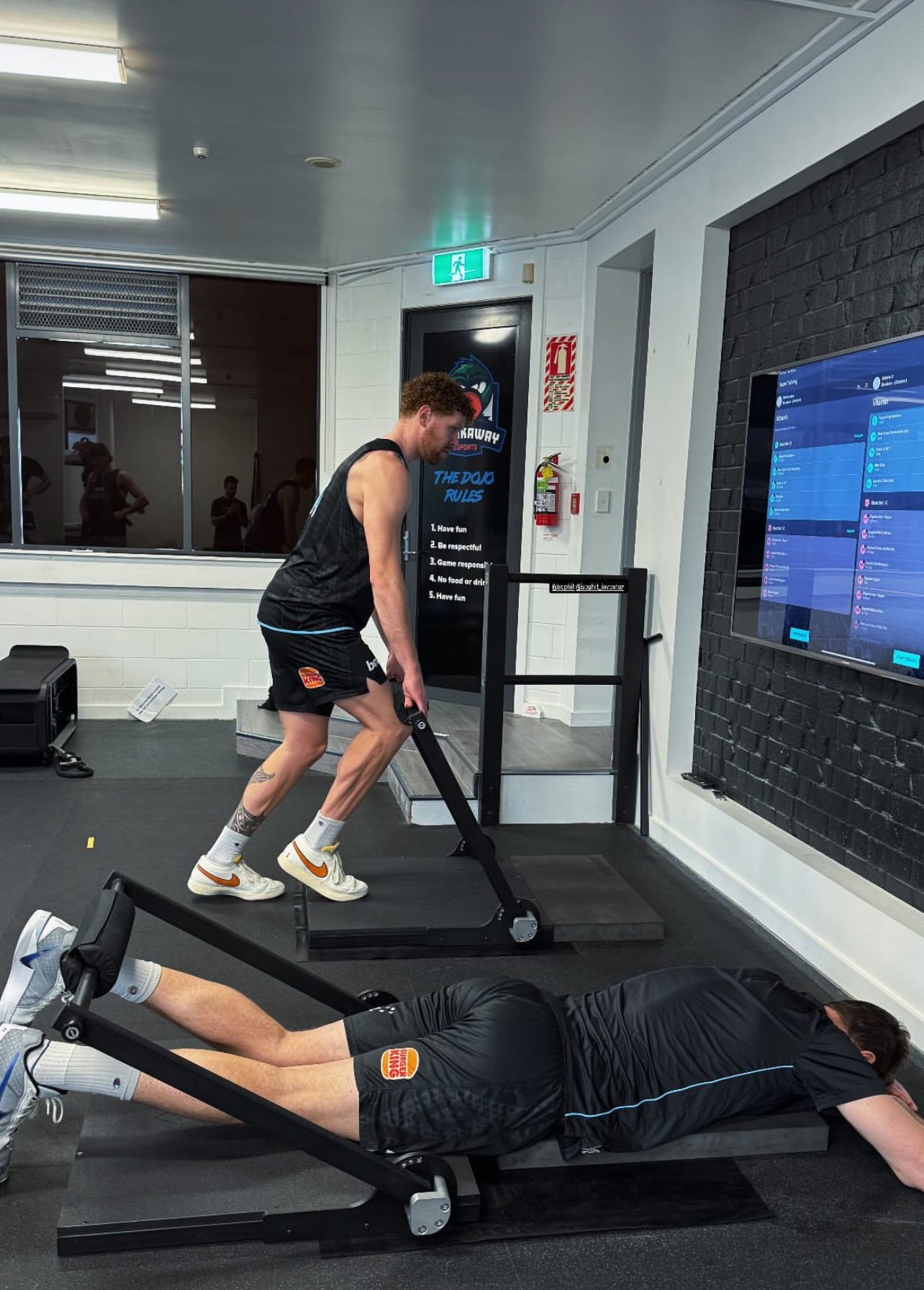
A 45-second contraction duration is particularly effective for developing isometric strength endurance because it challenges multiple systems simultaneously. Neural drive must be sustained, intramuscular coordination must be preserved, tendons must tolerate prolonged strain, and local circulation must adapt to ongoing demand. Shorter durations largely reflect peak force capability, while longer contractions reveal whether force can be maintained and regulated as fatigue accumulates. This distinction is essential for athletes who must repeatedly generate and control force throughout competition rather than express it once. The descending-intensity nature of PIMA allows maximal intent to be preserved while mechanical stress naturally declines, making this duration both effective and tolerable.
There are situations, however, where time constraints require shorter contraction durations. In these cases, reducing PIMA contractions to approximately 15 seconds is appropriate, with the understanding that force output will increase substantially. Shorter durations enable higher relative force levels and can be useful for neural activation, potentiation, or acute readiness. This increased force output also elevates tissue stress and must be programmed accordingly. Even under time compression, PIMA retains its advantages by maintaining stability, precision, and fatigue-appropriate load behavior.
PIMA is uniquely suited for tendon health and adaptation. Tendons adapt slowly and require controlled, sustained mechanical loading to strengthen without excessive risk. Because load decreases with fatigue during PIMA, tendons experience meaningful strain without the escalating joint stress associated with fixed external loads. Practitioners can select joint angles to bias specific tendon regions and adjust contraction duration to optimize stimulus while managing fatigue. This makes PIMA particularly valuable for both tendon strengthening and reconditioning phases of training.
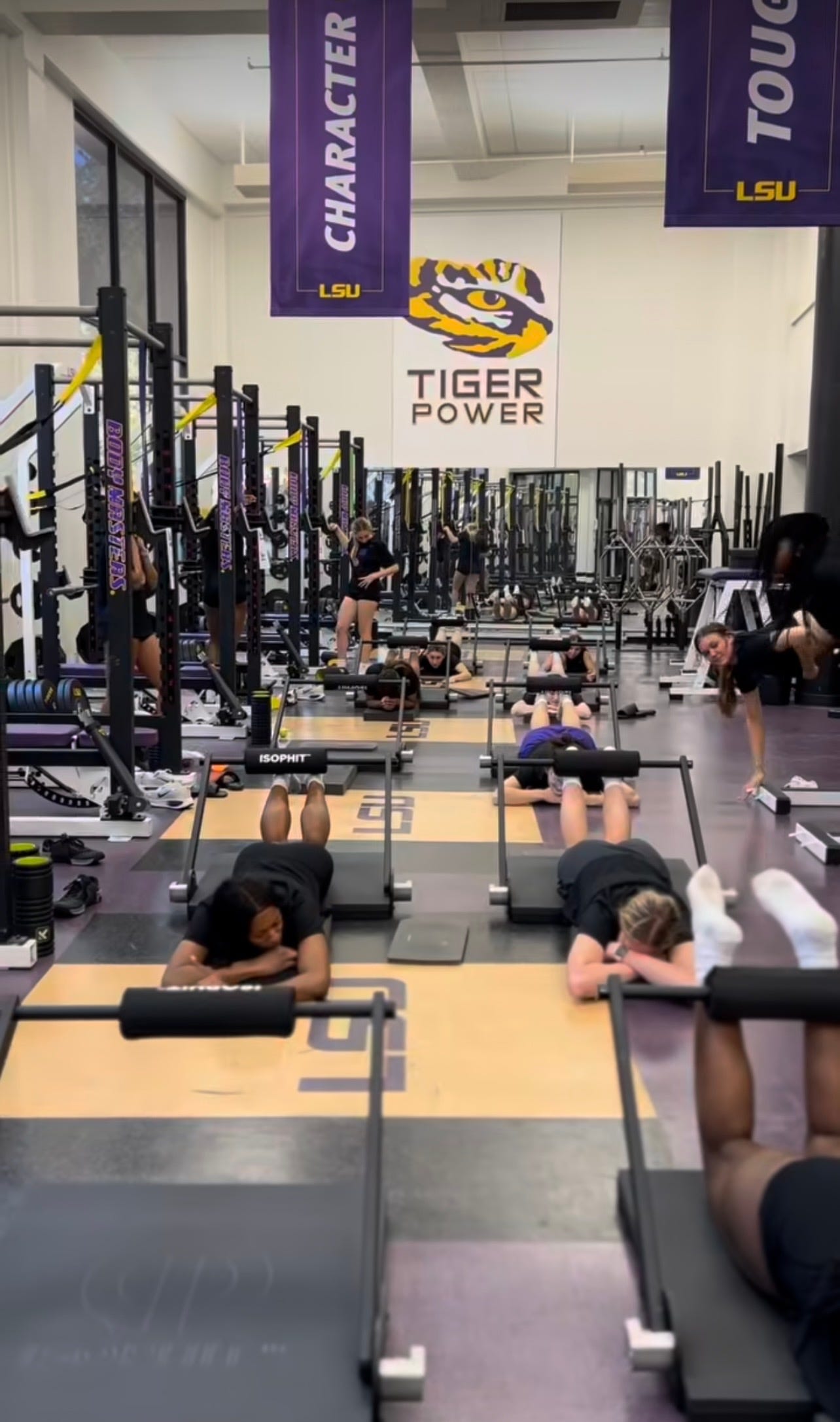
Beyond long-term development, PIMA has practical applications before and after competition. Short-duration PIMA contractions can be used pre-game to activate musculature, enhance neural readiness, and promote circulation without inducing fatigue. Post-game, longer and lower-intensity PIMA contractions support blood flow to muscle, tendon, and bone, facilitating recovery without additional mechanical stress. In both contexts, the stability and self-regulating nature of PIMA make it a reliable and repeatable tool in high-stakes environments.
Isometric training is not a monolith, and the distinction between PIMA and HIMA is not merely academic. It has direct implications for safety, precision, tissue adaptation, and performance transfer. Progressing isometric training through whole-body Isometric Strength Endurance using PIMA establishes a foundation of durability, control, and force sustainability. It allows athletes to train with maximal intent while respecting fatigue, preserving joint integrity, and targeting tissues with precision. HIMA remains a valuable method in specific contexts, but when the goal is to build a resilient, adaptable system capable of meeting the demands of modern sport, PIMA represents the more appropriate starting point.
At Isophit, we help the world’s strongest, fastest, and most dominant athletes—and everyday people—to win more, hurt less, and age stronger.
Order your Isophit at www.isophit.com