Why Force Direction—not Position—Determines How the Body Performs

Direction of force is one of the most misunderstood yet most influential variables in strength training. Most conversations center on how much force is produced, but the body does not operate in absolutes—it operates in relationships. Where force is applied, how it is directed, and the distance from the joint to the line of force will ultimately determine how the system organizes itself. This is where the distinction between a moment arm and what is often casually referred to as a “level arm” becomes critical—and where a deeper, more precise understanding changes how we program entirely.
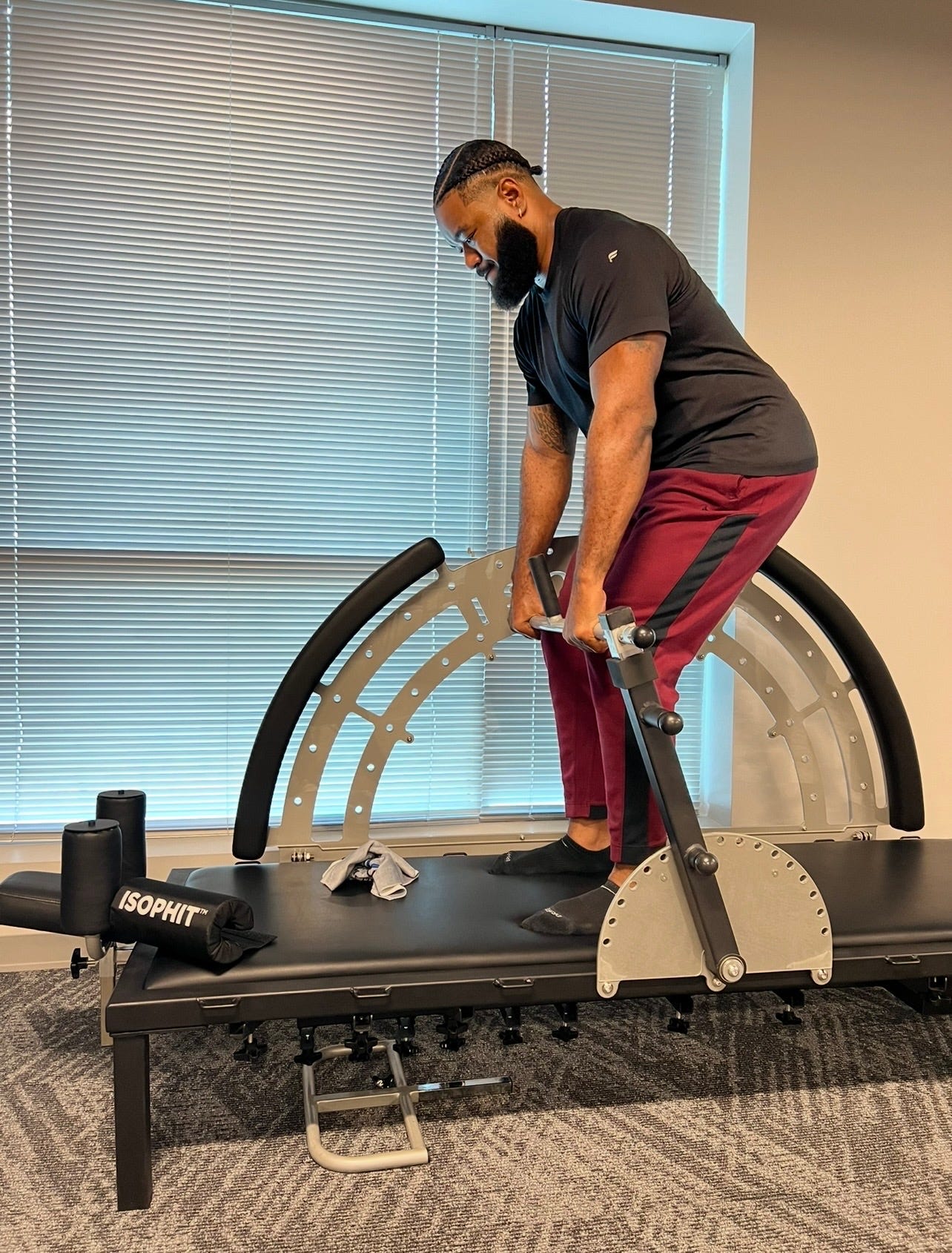
A moment arm is the perpendicular distance from the joint axis to the line of force. As that distance increases, torque increases. This is mechanical law. Torque equals force multiplied by that perpendicular distance. What many call a “lever arm” is simply the visible limb segment—the distance from the joint to where the restraint is applied. But the limb does not define torque. The line of force does. The moment arm is defined by the geometry between the joint and the force vector, not by what the eye sees as the lever.
Imagine an invisible line drawn from the joint axis to the line of force. This line represents the shortest, perpendicular distance between the axis and the force vector. This is the moment arm. It is what determines torque, and it is what the body is ultimately responding to. Most textbooks visually represent the limb as the lever and imply that its length defines the mechanical demand. In reality, this is only true when the limb happens to be perpendicular to the line of force. Outside of that condition, the visible lever no longer represents the true torque-producing distance.
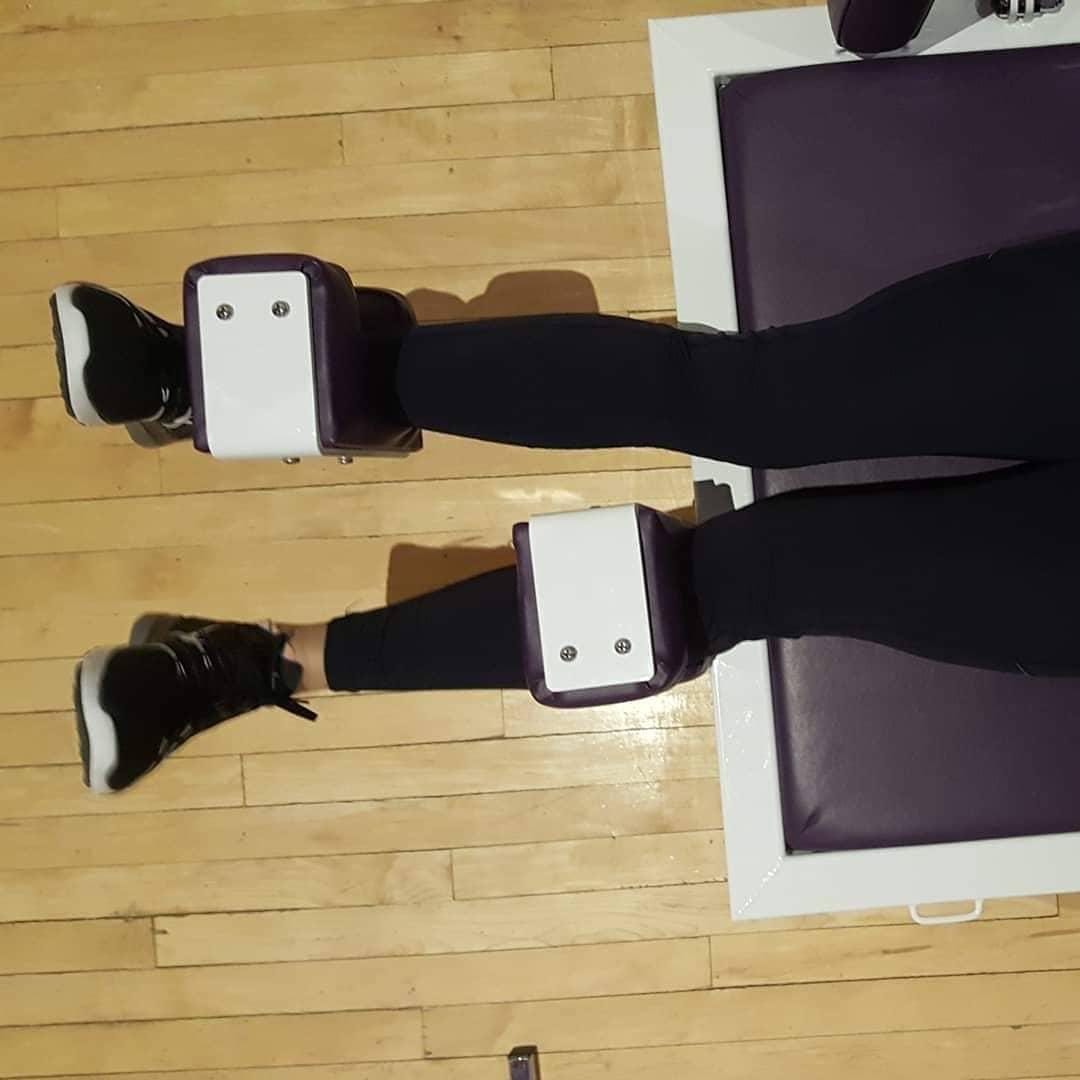
Jessica’s setup makes this clear. She is lying down with each leg secured by a restraint, but the positioning is intentionally different. On her right leg, the restraint is placed further down the limb, closer to the ankle. On her left leg, the restraint is positioned closer to the knee. At a glance, this appears to be a simple difference in lever length. In reality, it is a change in the moment arm—and therefore a change in torque.
Jessica’s motion is pulling into adduction, which means the line of force is creating a frontal plane torque that must be managed at both the hip and the knee.
On the right side, the longer visible limb increases the potential for a larger moment arm. When the perpendicular distance from the hip to the line of force increases, torque rises, and the system is forced into a global solution. The hip adductor complex—adductor magnus, longus, brevis, gracilis, and pectineus—becomes the primary driver of force at the hip. At the same time, the increased distance exposes the knee to greater torque, requiring coordinated contribution from the medial knee stabilizing complex, including the vastus medialis, gracilis, sartorius, semitendinosus, semimembranosus, and the medial head of the gastrocnemius. These muscles organize together to manage joint stress, control rotation, and stabilize the knee under load. Force must be generated, tolerated, and transferred across segments. The body cannot isolate its way out of a high-torque demand.
On the left side, the shorter visible limb reduces the potential moment arm. With a smaller perpendicular distance to the line of force, torque decreases. The knee is less influenced, and the system can solve the problem more locally. The hip adductor complex still drives the movement, but with reduced overall torque demand, and the contribution required from the medial knee stabilizers is lower. The task is simplified, and the recruitment strategy reflects that. If the goal is to further reduce influence at the knee, the point of restraint can be moved above the joint, minimizing the knee’s moment arm and directing the demand more specifically to the hip.
No exercise is ever a single-joint problem. That idea is a simplification that breaks down the moment you understand force. The instant a line of force is applied, it creates a moment arm at every joint it crosses. That means torque is being generated simultaneously at the hip, the knee, the pelvis, the spine, and beyond. The body does not isolate. It organizes.
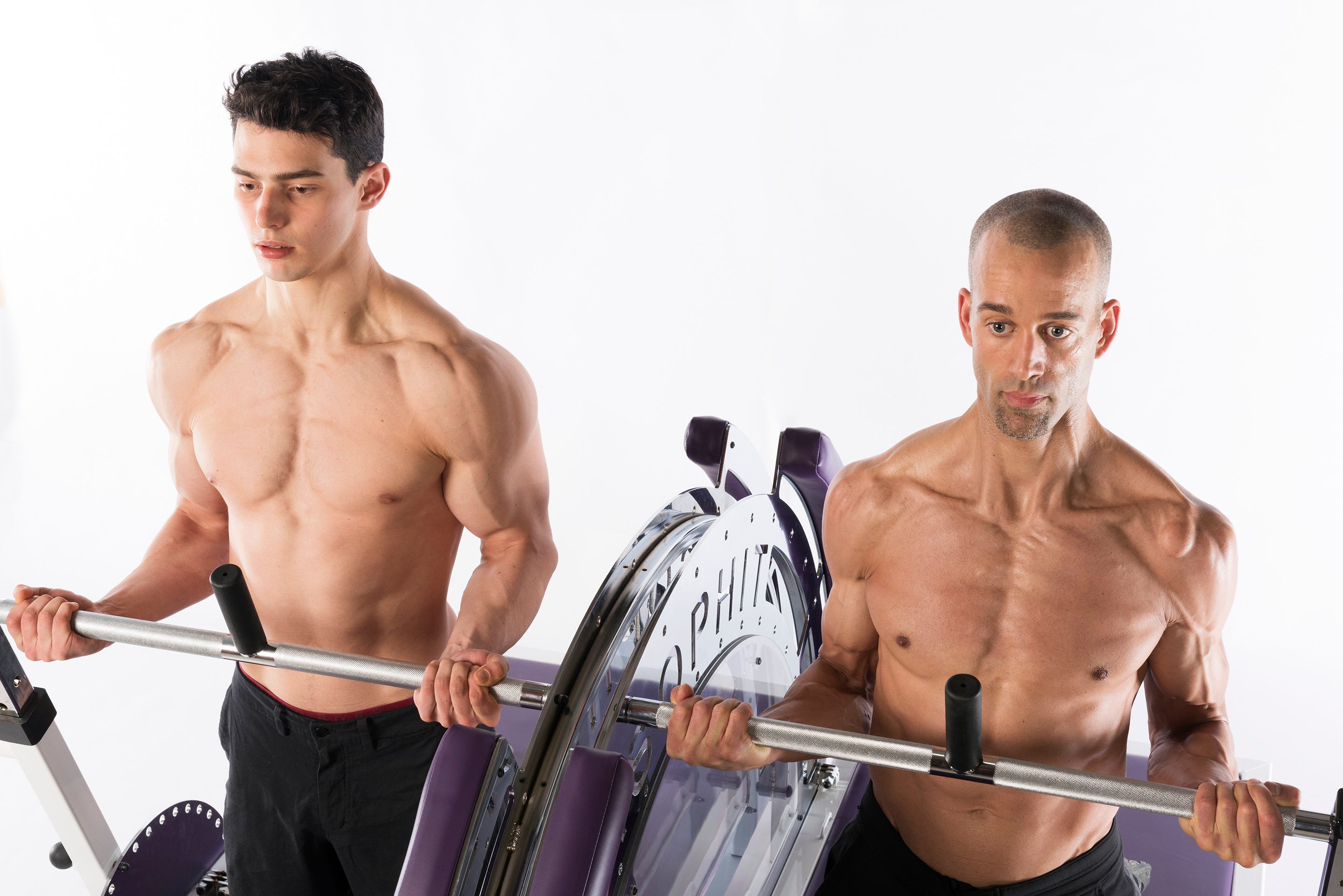
The bicep curl is often described as a single-joint exercise. Yet it involves the wrist and finger joints, the elbow, the radioulnar joint, and the glenohumeral joint. That is not one joint. It is a system of joints coordinating around a single line of force. Once that force is applied, it creates a moment arm at every joint it influences. The elbow may be the primary joint where motion occurs, but it is not the only joint solving the problem. The wrist must stabilize, the forearm must manage rotation, and the shoulder must organize position and support force transmission. The label “single-joint” describes intent. It does not describe reality.
Every setup is a system-wide demand.
When you change the point of restraint or the direction of force, you are not just targeting a muscle or even a joint—you are redistributing torque across the entire body. One joint may lead, another may support, but all of them are involved. The system will always prioritize the joints under the greatest torque demand, and everything else will coordinate around that requirement.
This is why understanding isometric force production is so important. It is the mode of contraction that allows the system to organize, stabilize, and transfer force efficiently across joints. Without it, force cannot be effectively managed, and performance outcomes are compromised.
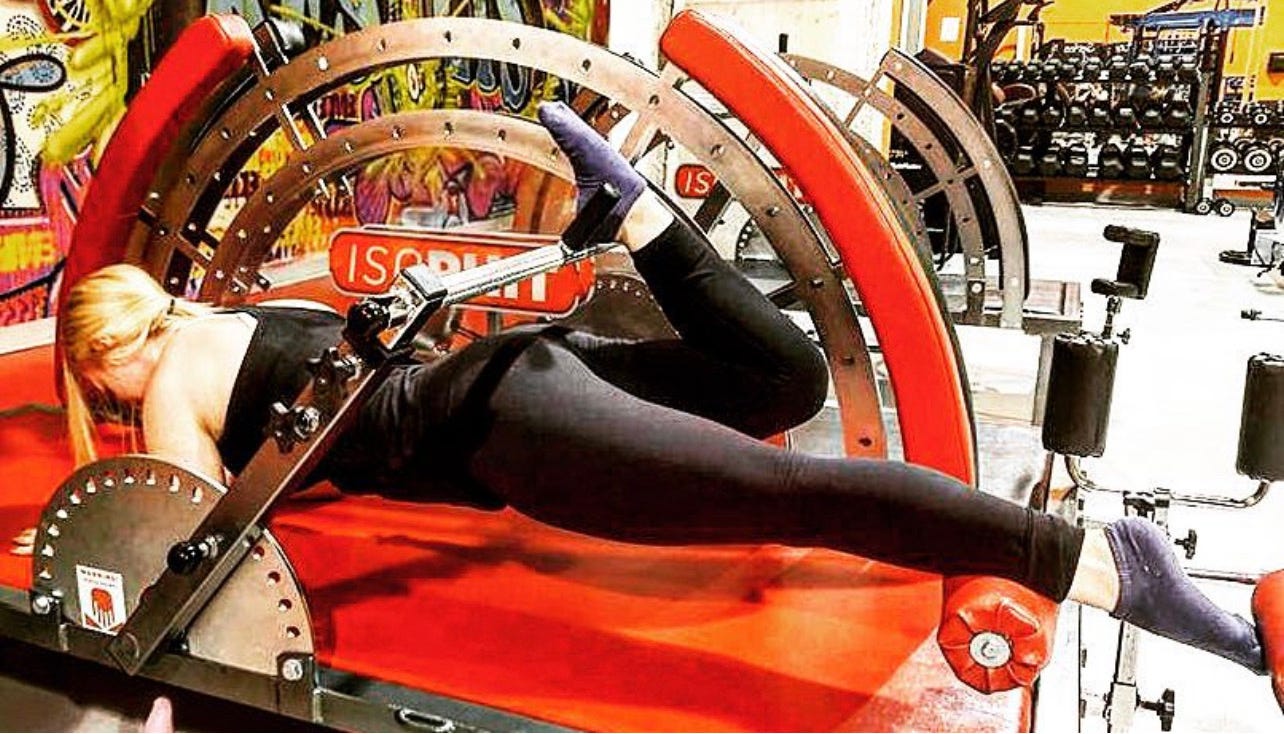
Most exercise classifications fall short. Terms like “hip exercise” or “knee exercise” are convenient, but they are incomplete. They describe intent, not reality. In reality, every exercise is a multi-joint solution to a force problem defined by geometry. If you fail to account for how a setup influences every joint it touches, you are not designing the exercise—you are guessing at the outcome.
The takeaway is clear. The limb shows you where force is applied. The moment arm shows you how much torque must be managed. And that is determined entirely by the perpendicular distance to the line of force—not by the length or orientation of the limb.
Isophit allows you to design several trillion exercise variations by manipulating direction of force, point of application, and intent—giving you precise control over how the body produces and manages force.
If you want to apply this level of precision in both performance training and rehabilitation, the Isophit Strength Coach Certification Course provides a structured framework for understanding and programming isometric loading—so every position, every restraint, and every contraction serves a clear and decisive purpose.
At Isophit, we help the world’s strongest, fastest, and most dominant athletes—and everyday people—to win more, hurt less, and age stronger.
Learn more at www.isophit.com