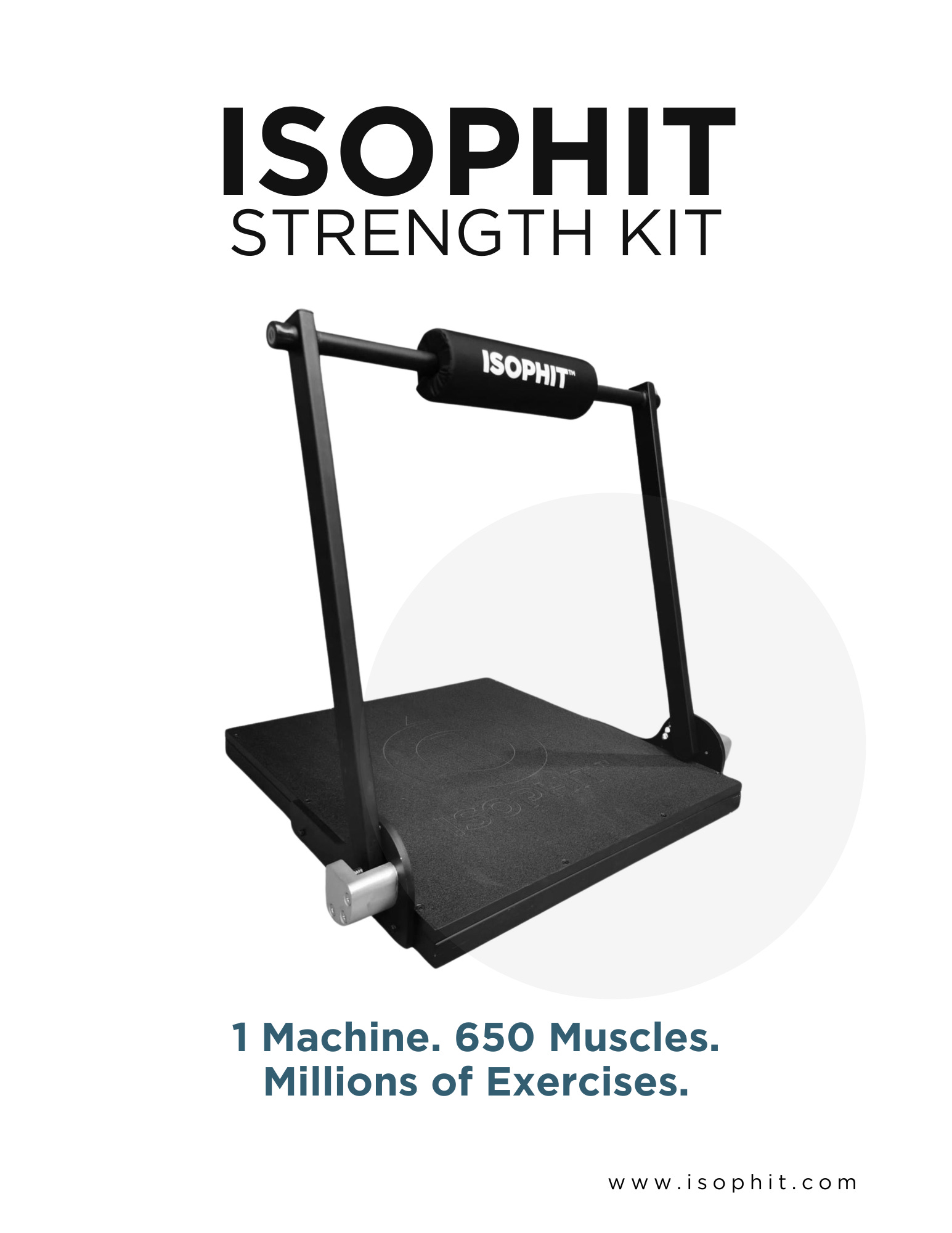
What If Dynamic Training Is the Wrong Intervention for Muscle and Joint Pain?

Muscle and joint pain has become so common that many people treat it as a normal cost of aging. The stiff knee after sitting. The aching hip after walking. The shoulder that once moved freely but now requires negotiation. The back that quietly dictates how long someone can drive, sit, work, train, or play with their kids.

Globally, this is not a small problem. It is one of the largest human function problems on earth. According to the World Health Organization, roughly 1.71 billion people live with musculoskeletal conditions worldwide. Low back pain remains the leading cause of disability globally. In 2020, approximately 619 million people experienced low back pain, and that number is projected to rise to 843 million by 2050. Osteoarthritis affects more than half a billion people worldwide.
We have medicalized the problem, insured the problem, imaged the problem, medicated the problem, and normalized the problem. What we have not done well enough is ask a simpler question: what is the body failing to produce?
Imagine driving your car with loose bolts. The sound gets louder. The vibration increases. The system feels less reliable. You could polish the car, change the stereo, repaint the body, or drive more carefully, but none of those interventions solve the real problem. The bolts need to be tightened. And the intervention itself is not complicated. You tighten them.
The body is similar.
The number one overlooked cause of muscle and joint pain as we age is poor isometric force production. Age exposes the problem, but it does not automatically create it. The body loses the ability to create, tolerate, and distribute force across joints. When that happens, muscles tighten, joints feel unstable, tendons become irritated, movement becomes guarded, and pain becomes the message.
Muscle tone is subconscious isometric force production. It is the quiet force your body uses to hold joints in better positions before, during, and after movement. When that force is insufficient, the body finds compensation. It borrows from other tissues. It asks joints to absorb what muscles should have controlled. It asks tendons to tolerate loads they were not prepared to transmit. Eventually the message becomes pain.
This is where the science becomes hard to ignore.
The study, “Association of Thigh Muscle Strength With Knee Symptoms and Radiographic Disease Stage of Osteoarthritis: Data From the Osteoarthritis Initiative,” supports the idea that poor isometric strength may increase pain risk. In 3,809 participants from the Osteoarthritis Initiative, painful knees had significantly lower isometric extensor and flexor strength than pain-free knees. Just as important, radiographic disease severity did not explain the strength loss in the same way. In asymptomatic knees, isometric strength did not meaningfully decline as radiographic osteoarthritis severity increased.
The implication is difficult to ignore. Poor isometric strength was associated with pain. Not poor movement quality. Not poor cardiovascular fitness. Not radiographic disease severity. Poor isometric strength.
What if the most common intervention for muscle and joint pain is not addressing the force quality most closely associated with pain?
For decades, dynamic training has been the default recommendation. Move more. Strengthen more. Perform more repetitions. Add more load. There is value in dynamic training, but only when the intervention matches the problem. Dynamic training is excellent for improving movement. But if the underlying problem is poor isometric force production, movement may not be the best medicine.
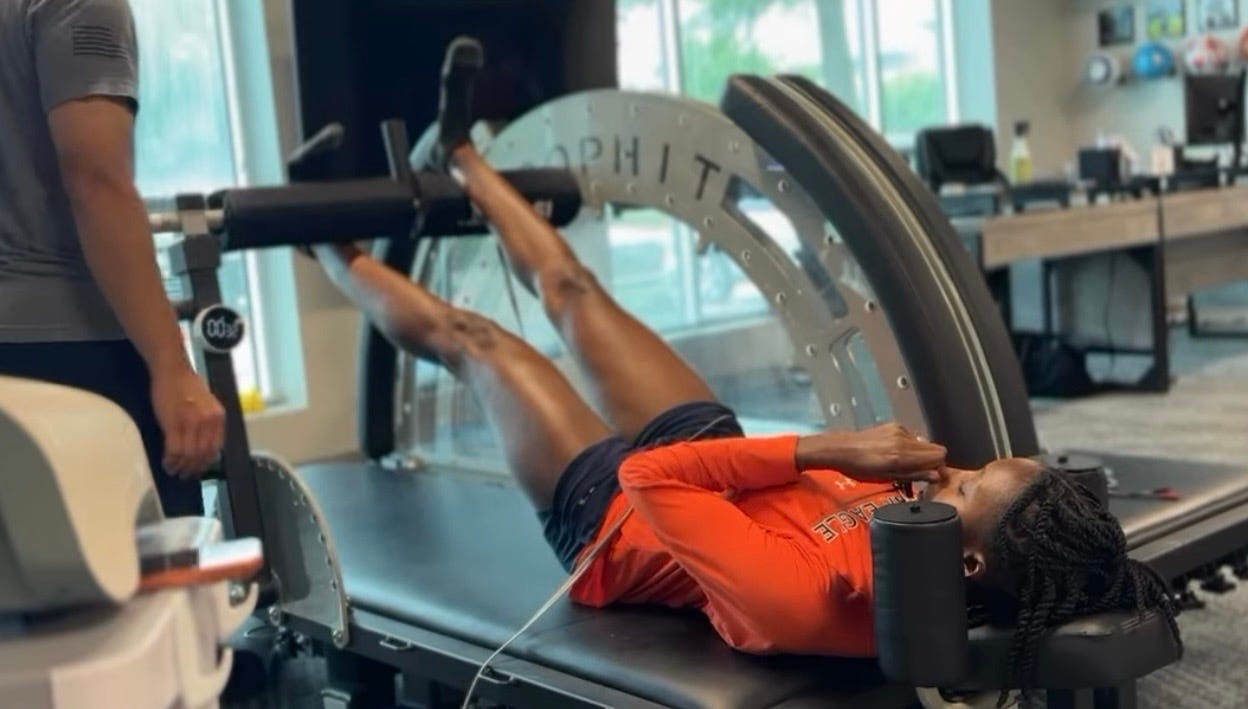
A more recent 2026 study made that point even clearer. In “Neuromuscular and Functional Adaptations Promoted by Lower Limb Isometric Training with NMES Conditioning Contractions in Older Adults,” researchers compared 18 sessions of isometric training with NMES conditioning contractions against 18 sessions of dynamic resistance training in older adults.
The result was hard to ignore.
The isometric group improved maximal voluntary contraction by 30.4 percent, moving from 163.4 Nm to 213.1 Nm. The dynamic resistance training group moved from 143.3 Nm to 140.7 Nm, meaning isometric force production decreased by roughly 1.8 percent after 18 sessions.
That finding should force us to rethink how we approach muscle and joint pain.
If poor isometric strength is associated with pain severity, and dynamic training fails to improve isometric force production, then dynamic training may be addressing the symptom while leaving the underlying force deficit unchanged. In some cases, it may even allow that deficit to worsen.
This does not mean dynamic training causes pain. It means dynamic training may be the wrong primary intervention when the problem is poor isometric force production. Movement may improve movement. But if pain is associated with a loss of isometric force, then restoring isometric force should become a primary objective of treatment, not an afterthought.
Last week, I received a message that made this point feel less like theory and more like reality.
It came from Dan Blackburn, one of the biggest names in Canadian youth hockey and owner of the National Training Centre. Dan had previously ruptured his left quadriceps tendon in a trampoline park accident, but the pain he wrote to me about was different. This was years of right knee pain that he had quietly accepted as part of life.
Sitting for 30 to 40 minutes meant discomfort. Descending stairs created reminders. Road trips required him to reposition, stretch, or elevate the knee just to settle the joint down. It was not dramatic enough to stop his life, but it was constant enough to shape it.
After 12 months of consistent lower-body isometric training — squats, Copenhagens, Bulgarians, RDLs, lunges, and related patterns — the pain was gone. Not reduced. Gone. He noticed it on a road trip when the old need to adjust his knee simply never arrived.
That is the power of restoring isometric force.
Of course, it is not magic. It is mechanics meeting biology. When the body improves isometric force production, joints often feel more stable. Muscles no longer need to stay on alert. Movement becomes less threatening. The nervous system receives better information. The person does not just feel stronger; they feel more capable.
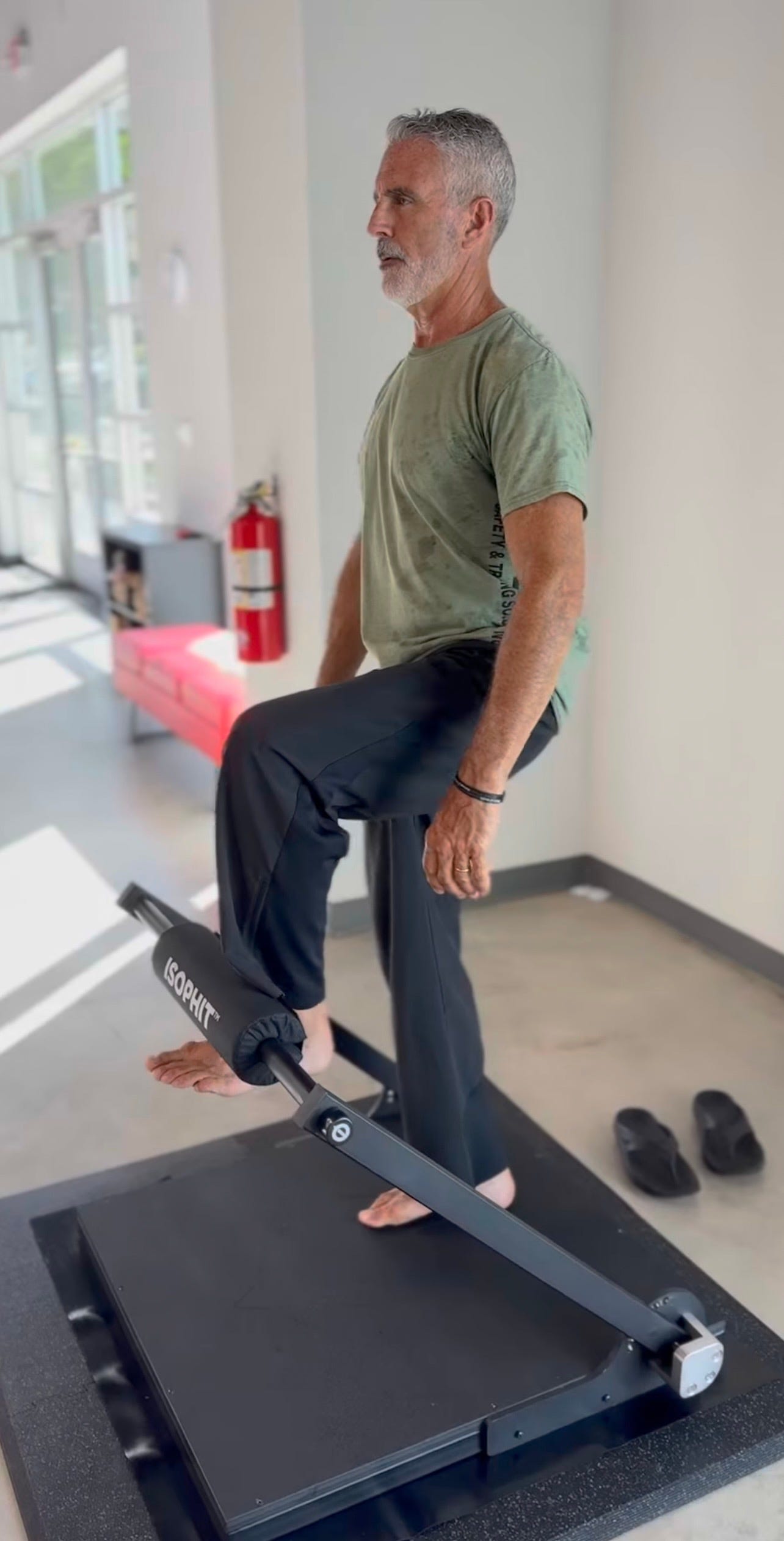
This is why the solution becomes simple once the problem is understood. The goal is not to chase pain. The goal is to restore the isometric force qualities that help the body organize itself. Isometric training gives the body a controlled environment to rebuild strength where it matters most: at specific joint positions, under specific levels of tension, for specific durations.
Aging does not require us to become fragile. But it does require us to become more intentional. If the body is struggling to hold itself together, train the quality responsible for holding it together.
That quality is isometric force production.
And for millions of people living with muscle and joint pain, it may be the missing foundation they have been searching for.
At Isophit, we help the world’s strongest, fastest, and most dominant athletes—and everyday people—win more, hurt less, and age stronger.
Order your Isophit at www.isophit.com