Improving Matchday Performance Durability with the Isophit Strength Straps

The future of pregame preparation is not simply about movement. It is about preparing the neuromuscular system to organize and sustain force under the demands of competition.

Tennis places enormous demands on the body because matches are not only explosive — they are prolonged. Athletes may compete for two, three, or even four hours while repeatedly accelerating, decelerating, rotating, stabilizing, and reproducing high-velocity force outputs under accumulating fatigue. Every split step, every lateral cut, every serve, every recovery step, and every rotational strike depends on the nervous system’s ability to rapidly create, organize, and manage isometric force throughout the body.
At the highest levels of tennis, milliseconds matter. The athlete who stabilizes faster, transfers force more efficiently, and maintains positional integrity deeper into competition usually controls the match.
This is where the Isophit Strength Straps are helping evolve modern pregame preparation.

Elite pregame preparation is no longer just about increasing body temperature or movement volume. In tennis, preparation must also organize the neuromuscular system for the repeated force demands of competition. Every split step, directional change, deceleration, and rotational strike requires coordinated stiffness, stability, and force transfer throughout the body. The Strength Straps provide athletes with a practical way to prepare those systems before the match ever begins.
One of the greatest advantages of the Strength Straps is their ability to create high-intensity isometric force production in highly specific positions and directions of effort. This matters because the nervous system does not simply respond to movement. It responds to force demand, stability demand, intent, and positional organization.
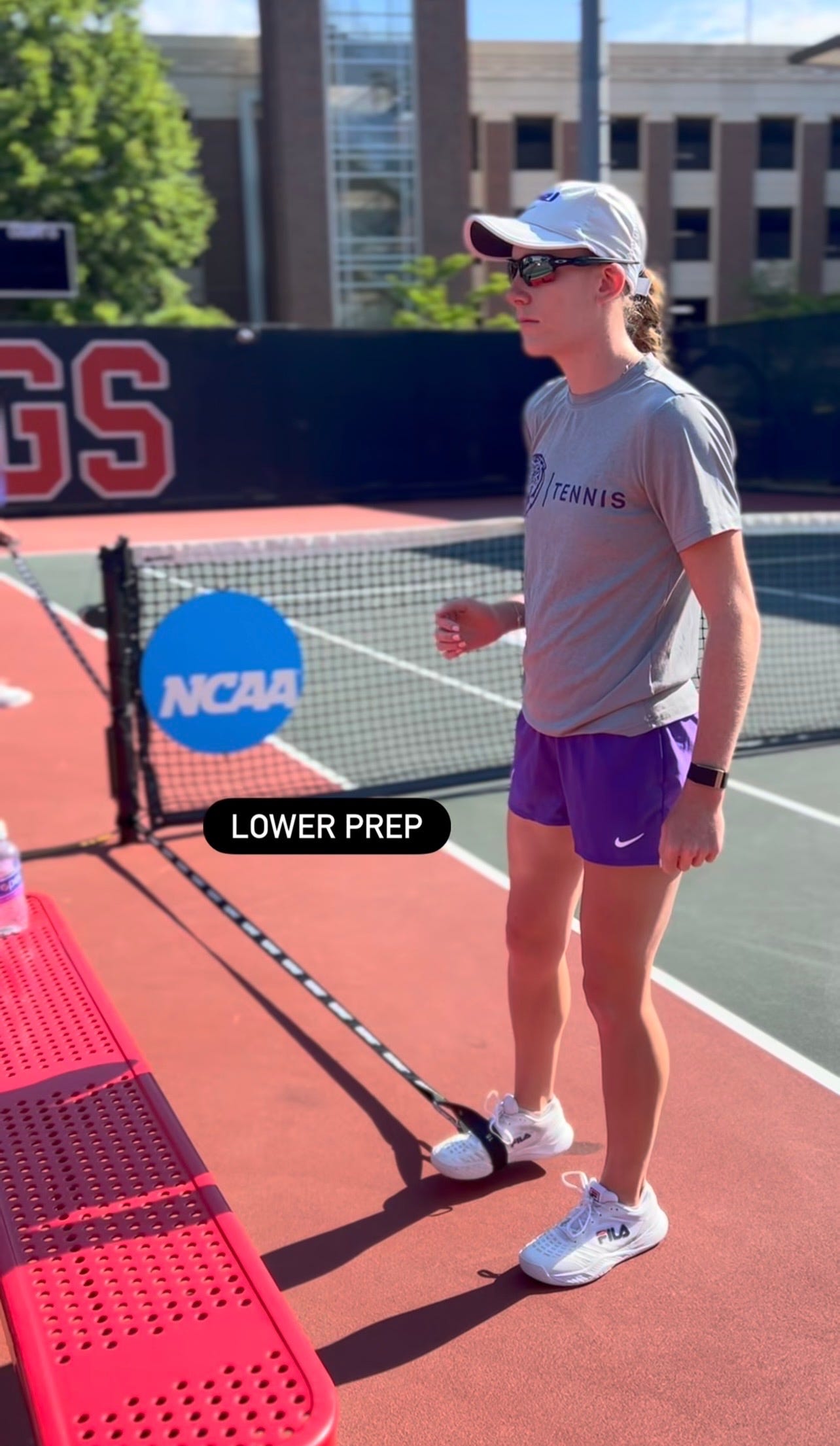
In tennis, athletes are constantly transitioning between movement and actively stable positions. Open-stance hitting, deceleration into lateral cuts, single-leg stabilization, rotational force transfer, and shoulder positioning during serving all depend on the body’s ability to rapidly organize stiffness and tension. The Strength Straps allow athletes to prepare these systems before the first rally ever begins.
This matters because tennis is not simply about producing force. It is about producing force while controlling force.
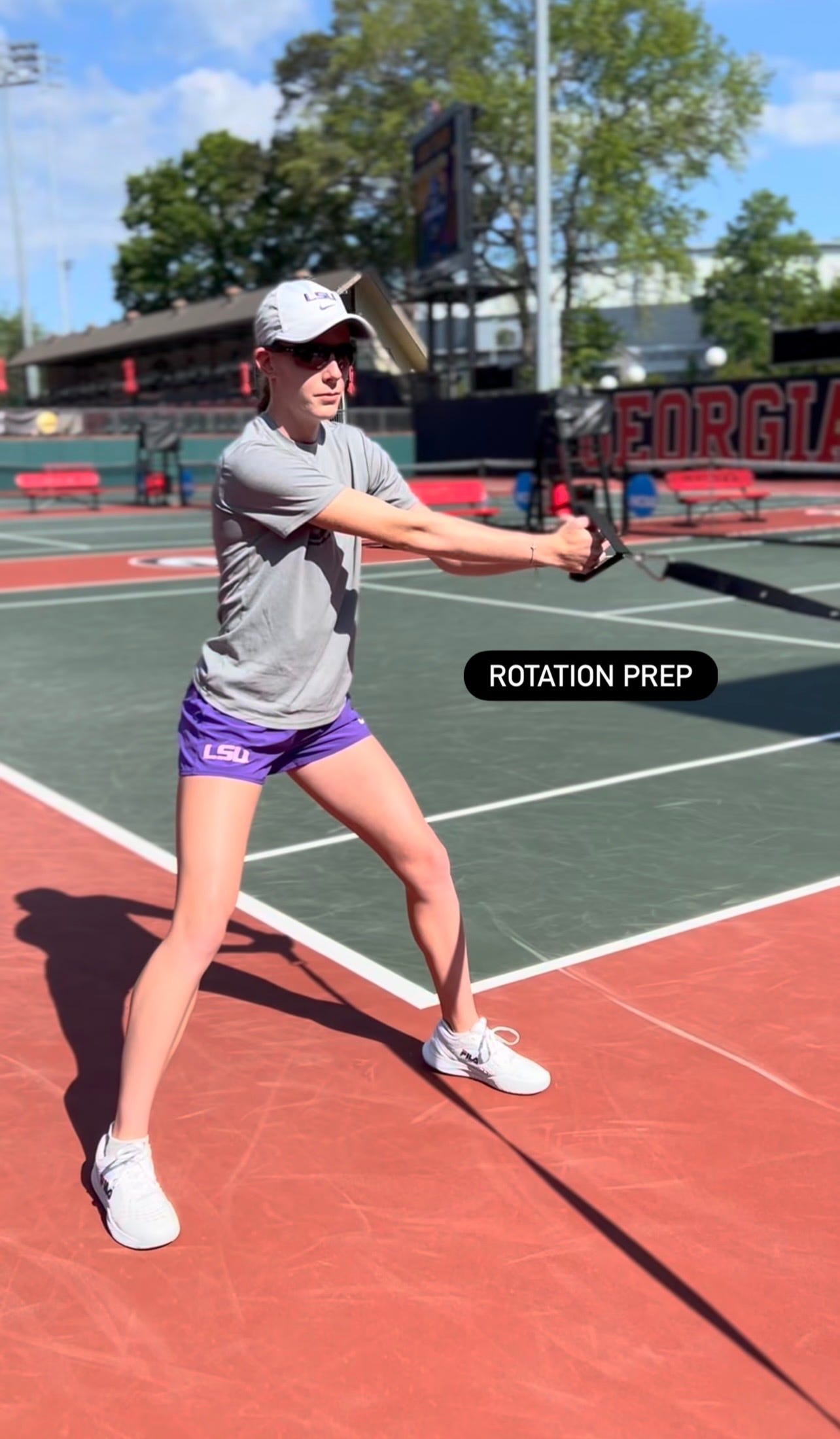
The rotational preparation sequences may be even more important. Tennis is fundamentally a rotational sport. Ground reaction forces must transfer efficiently through the hips, trunk, scapular system, and upper extremity during serving and stroke production. When trunk stiffness or pelvic control deteriorates, force leaks occur throughout the system. Athletes often compensate through the shoulder, elbow, or wrist instead of efficiently transferring force through the body.
The Strength Straps allow athletes to challenge rotational and anti-rotational stability in highly tennis-specific positions. This helps organize the neuromuscular system responsible for transferring force from the ground into the racket with greater efficiency and control.
In tennis, matchday performance durability is largely dictated by how efficiently the neuromuscular system continues to organize and manage force as fatigue accumulates. As matches progress, athletes who lose positional integrity, stiffness regulation, and force-transfer efficiency often experience declines in movement quality, timing, and stroke consistency. Athletes who maintain neuromuscular organization under fatigue are typically the ones who sustain performance deepest into competition.
Another major advantage of the Strength Straps is portability.

Tennis athletes live on the road. They compete in different facilities, different climates, and different environments every week. Weight room access is inconsistent. Time is limited. Preparation windows are short. The Strength Straps solve a real-world performance problem by allowing athletes to perform high-quality neuromuscular preparation almost anywhere. Benches, fences, posts, and stable structures instantly become preparation stations.
The Strength Straps also provide an efficient way to prepare the shoulder girdle and scapular stabilizers without excessive fatigue or joint irritation. Tennis places enormous repetitive stress on the shoulder complex. High-velocity serves and overhead actions require exceptional dynamic stability and force tolerance. Properly executed isometric preparation sequences help reinforce scapular positioning, trunk stiffness, and shoulder stability before competition begins.
Athletes often describe feeling more reactive, explosive, and connected after structured Strength Strap preparation. Movements become sharper. Timing improves. Force transfer feels cleaner. The body feels neurologically prepared for competition.
A huge thank you to the Louisiana State University Tigers women's tennis program for all of their support and for continuing to explore innovative approaches to neuromuscular preparation and tennis performance. Their implementation of the Isophit Strength Straps demonstrates how elite programs are evolving beyond traditional warm-up models and placing greater emphasis on force organization, positional integrity, and nervous system readiness. A special thank you as well to Ashley Kolwalewski for her continued support and willingness to integrate the Strength Straps into both athlete preparation and her own training while traveling with the team throughout the season.
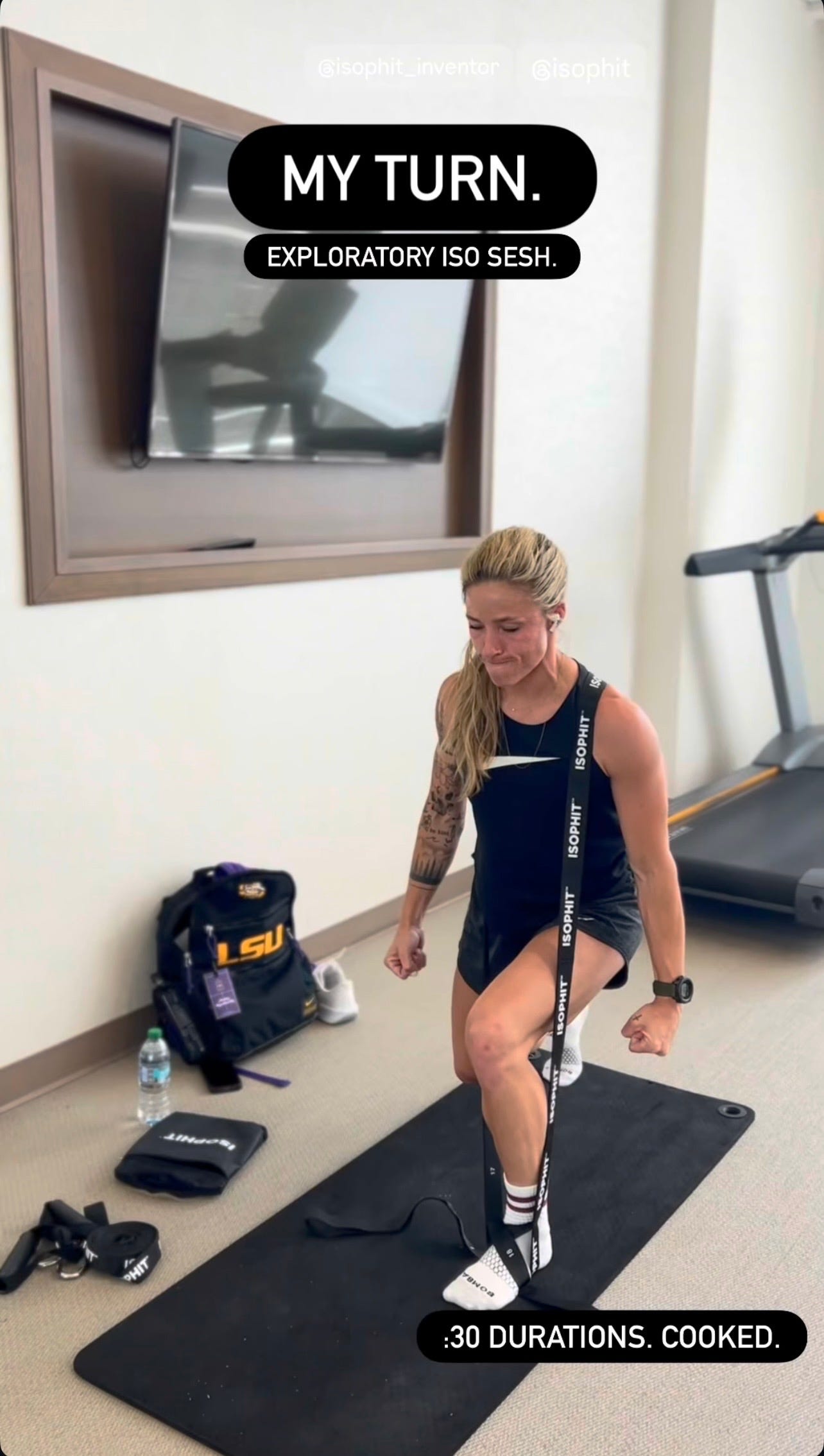
Because the future of pregame preparation belongs to the athletes who prepare the nervous system for the demands of competition before the match ever begins.
At Isophit, we help the world’s strongest, fastest, and most dominant athletes—and everyday people—to win more, hurt less, and age stronger.
Learn more at www.isophit.com