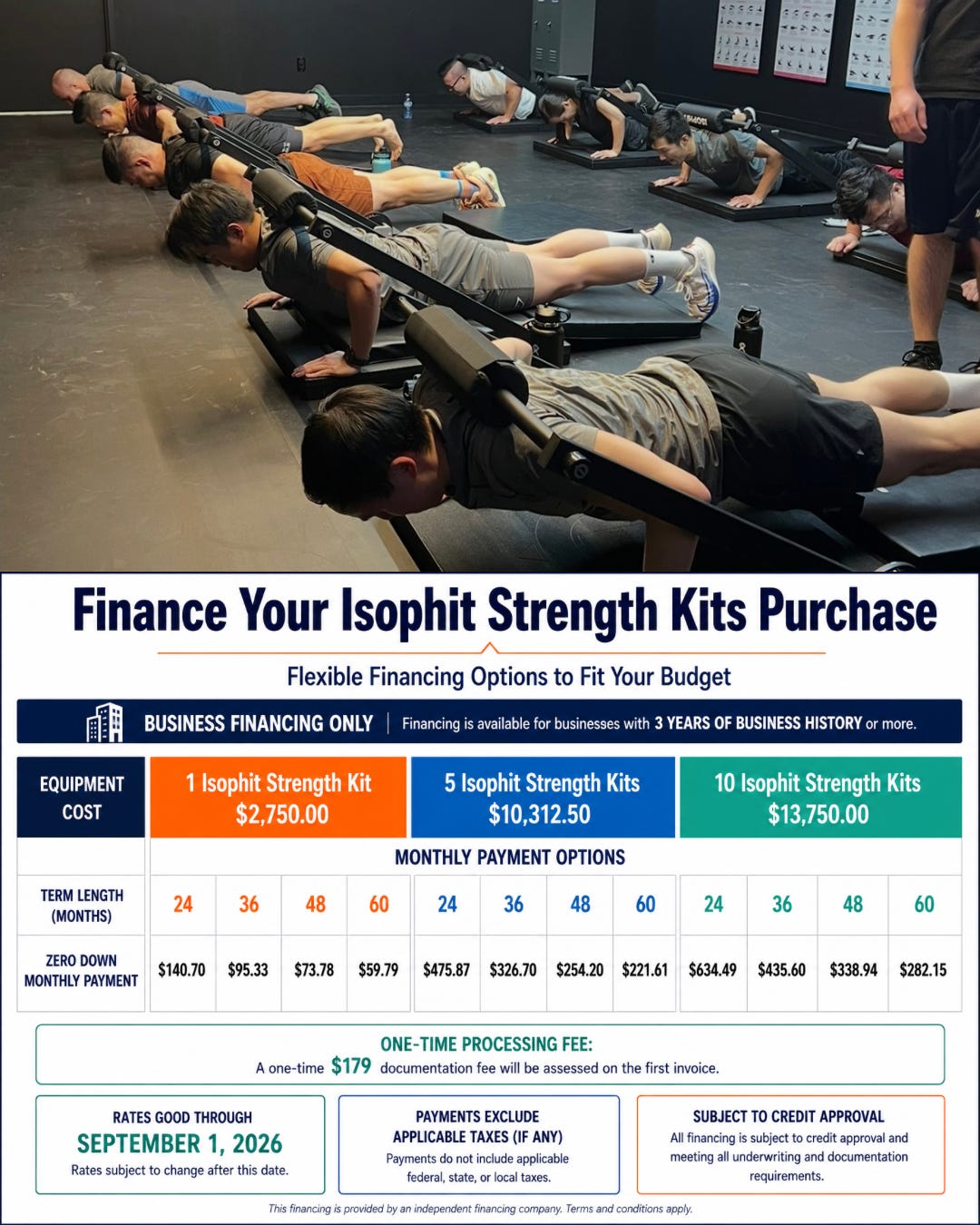
For Human Optimization: Better Is Better

When it comes to optimization, better is better. Human performance does not care about trends, traditions, or emotional attachment to a training style. The body only responds to stimulus. If a method improves force production, force tolerance, circulation, joint integrity, neuromuscular coordination, tendon stiffness, metabolic health, and long-term function more effectively than another approach, then that method deserves serious attention. Optimization is not about protecting old ideas. It is about improving outcomes.
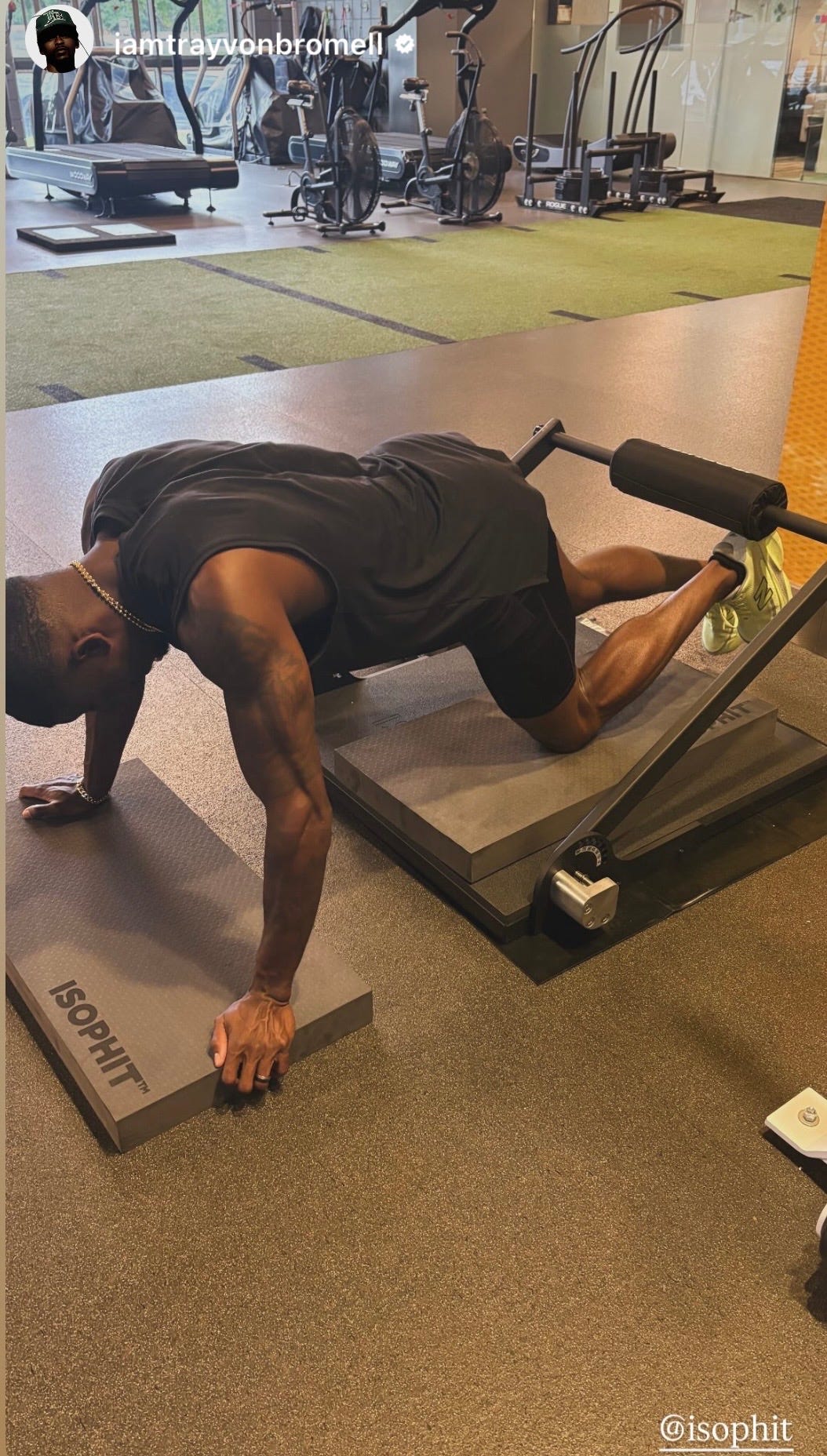
This is where isometric strength training changes the conversation.
For decades, most discussions around training have revolved around movement. Faster movement. More movement. Explosive movement. Endless movement. Yet every dynamic movement in human performance begins with one unavoidable reality: isometric force production. Before the body can accelerate, decelerate, redirect, stabilize, strike, sprint, jump, throw, rotate, or absorb force, it must first organize tension throughout the system. The body must create positional integrity before movement can occur efficiently.
Every movement starts with isometric force production.
This is not philosophy. It is biomechanics and physiology working together in real time.
Biomechanically, the body must establish stability before it can efficiently transfer force into movement. Physiologically, the nervous system must recruit motor units, coordinate muscular tension, stiffen connective tissues, and organize the body for load acceptance and force transfer. The two systems are inseparable. One explains the requirement. The other explains how the body fulfills it.
The foot contacts the ground at an instantaneous net velocity of zero. Change of direction occurs through rapidly organized isometric force production. Joint stabilization occurs isometrically. Tendons transfer force through actively stable positions. The nervous system coordinates muscular tension before visible movement even begins. Dynamic performance is ultimately dictated by the rate and magnitude of isometric force development.
If optimization is the goal, then training the foundation of force production matters.
This becomes even more important when discussing health.
One of the most overlooked realities in modern fitness is that the majority of people do not need more random movement. They need better force management. They need stronger connective tissue. They need improved vascular function. They need improved neuromuscular efficiency. They need greater structural integrity throughout the body. They need a training method capable of improving strength while simultaneously reducing unnecessary joint stress.
This is one reason isometric strength training continues to gain attention within health, rehabilitation, tactical performance, and elite sport.
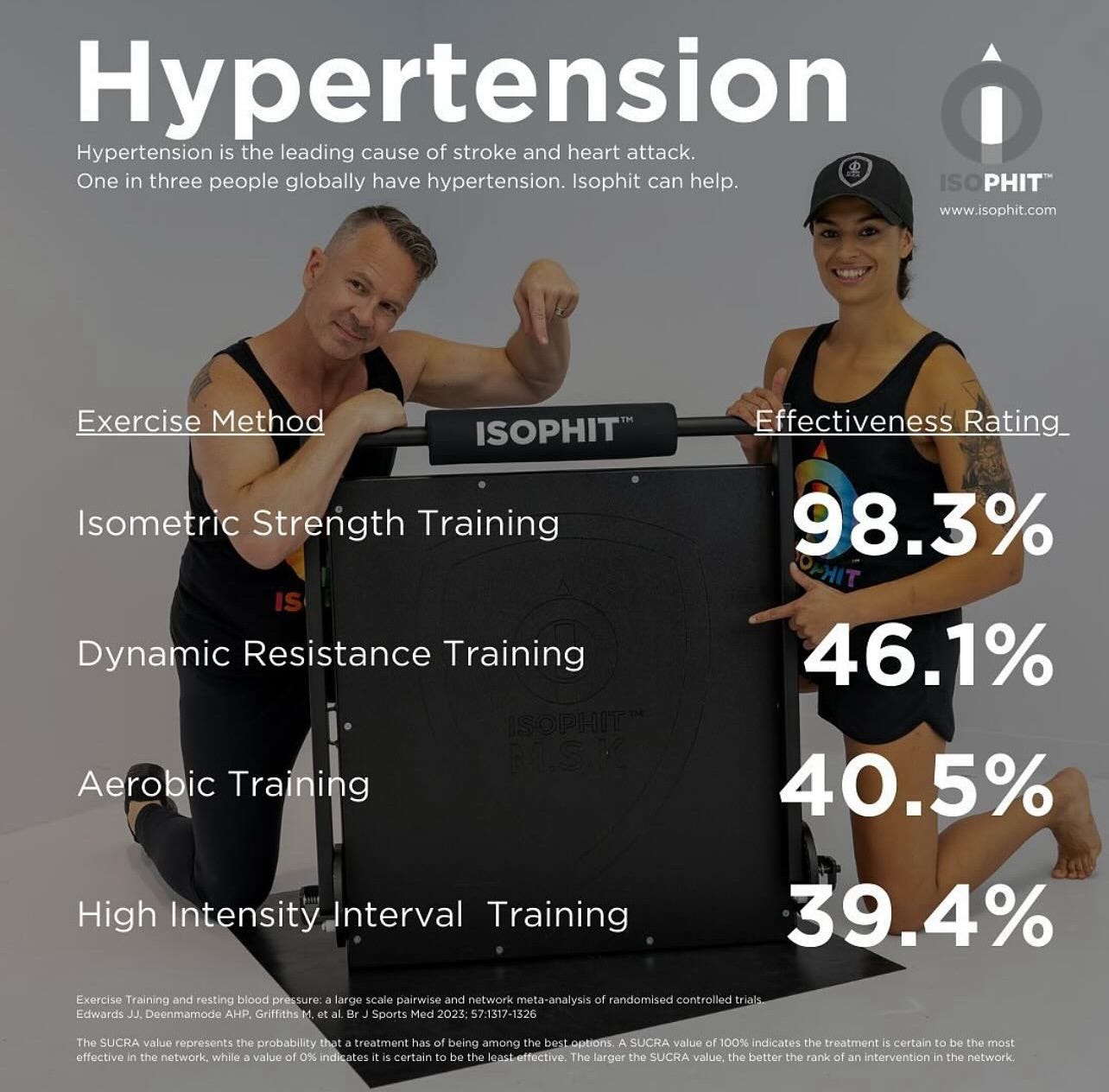
High-intensity isometric contractions have repeatedly demonstrated the most powerful blood pressure–lowering effects ever reported in exercise science literature. Compared to traditional aerobic exercise, dynamic resistance training, and high-intensity interval training, isometric strength training consistently produces dramatically superior reductions in both systolic and diastolic blood pressure. When it comes to improving one of the world’s leading predictors of premature death, it’s not even close.
Optimization is not just about aesthetics or athleticism. Optimization is about improving the systems that keep humans alive and functioning at a high level for as long as possible.
The tendon conversation is equally important.
Muscles generate force, but tendons transfer force. Without sufficient tendon stiffness and force tolerance, performance leaks throughout the system. Energy dissipates. Joint positions collapse. Tissue stress increases. Movement efficiency declines. Injury risk rises. Yet many training systems spend enormous amounts of time chasing movement outputs while neglecting the structures responsible for transmitting force in the first place.
Isometric training directly challenges this issue.
Because the body can generate high levels of muscular tension without excessive joint displacement, isometric training creates a unique environment for improving tendon loading tolerance and connective tissue adaptation. This is critical not only for elite athletes, but also for aging populations attempting to maintain mobility, balance, strength, and independence.
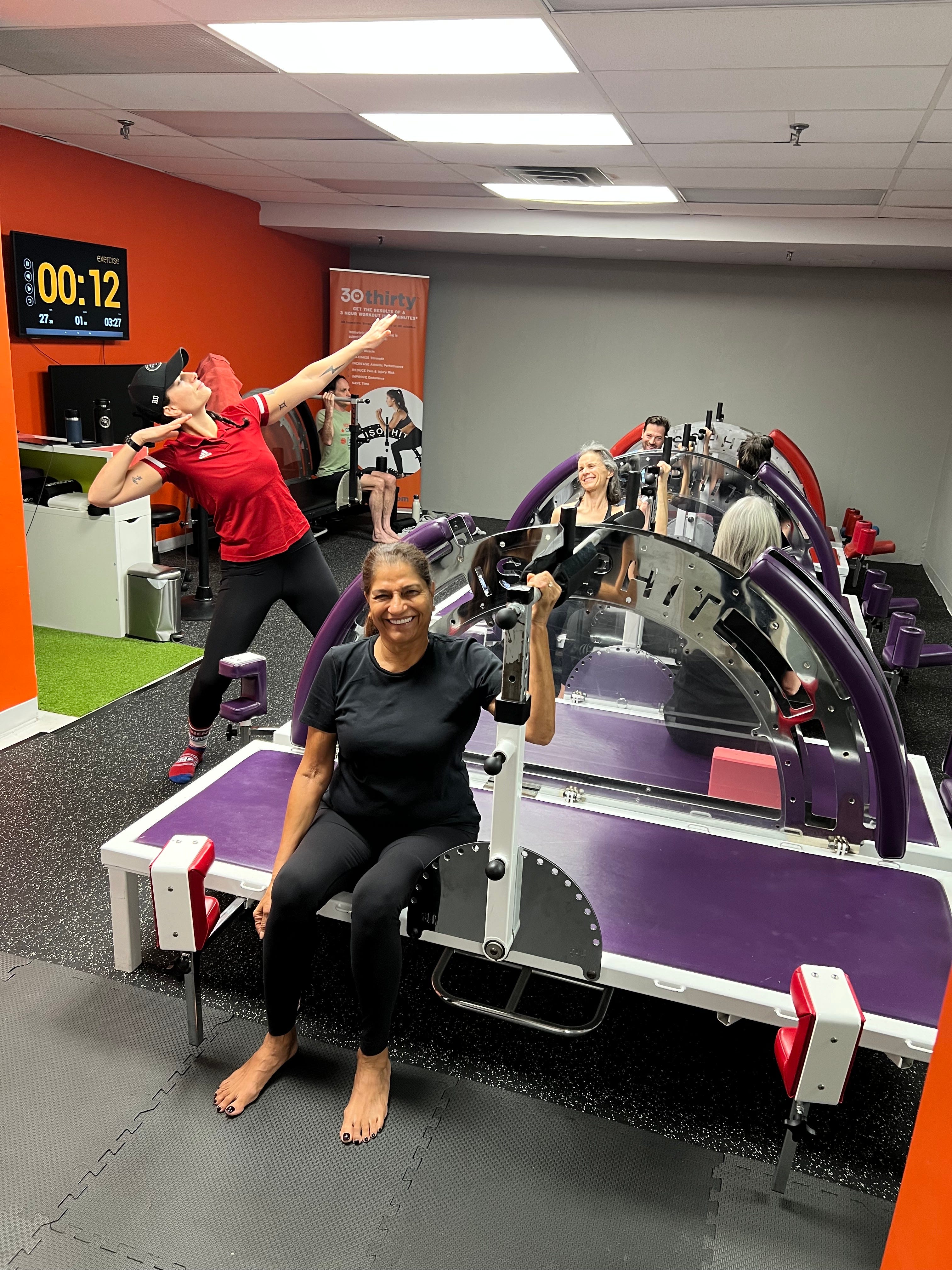
Aging itself is largely a loss-of-force problem.
People do not simply “get old.” They lose the ability to produce and tolerate force. They lose tendon stiffness. They lose muscular coordination. They lose balance and positional control. They lose the ability to stabilize efficiently. The result is decreased movement confidence, reduced physical capacity, and ultimately reduced quality of life.
Optimization requires interrupting that decline.
This is where isometric strength training offers enormous potential because it allows people to train force production safely, progressively, and efficiently across a broad spectrum of abilities. Elite athletes can use it to maximize rate of force development and improve force transfer through the kinetic chain. Rehabilitation patients can use it to restore tissue tolerance and neuromuscular control. Older adults can use it to improve circulation, strength, balance, and joint integrity without the excessive mechanical stress associated with many dynamic training environments.
Different goals. Same physiological foundation.
The nervous system also plays a central role in this discussion.
Human movement is not simply muscular. It is neurological. The brain constantly predicts, organizes, refines, and coordinates muscular tension throughout the body. Isometric training places enormous demands on this system because the body must sustain and regulate force without relying on momentum to hide weakness or positional instability. This increases conscious awareness of tension, improves motor unit recruitment strategies, and enhances the body’s ability to coordinate force throughout integrated movement patterns.
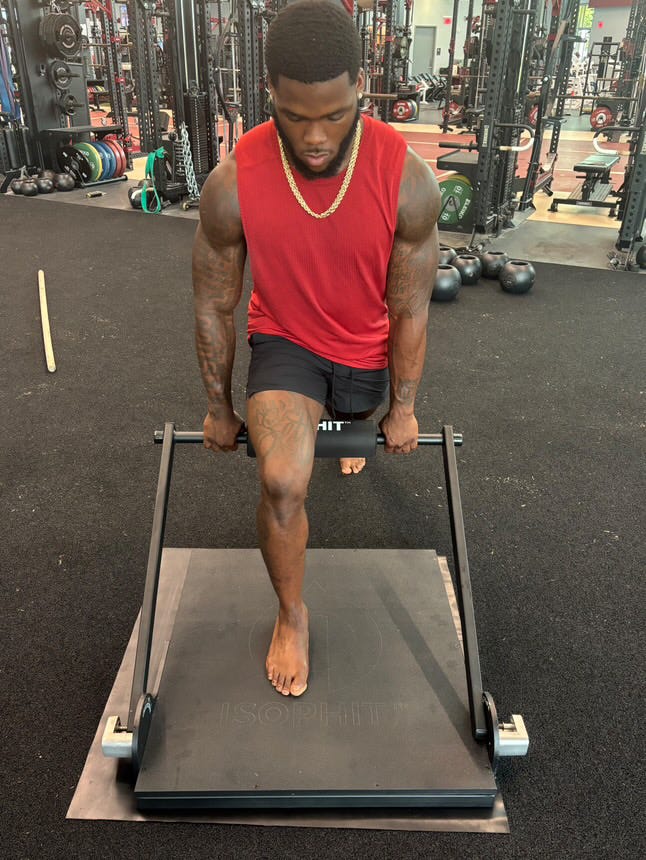
In simple terms, the body becomes more efficient at producing force.
And efficiency matters.
Better circulation is better. Better tendon stiffness is better. Better neuromuscular coordination is better. Better force transfer is better. Better blood pressure regulation is better. Better positional integrity is better. Better force tolerance is better.
Optimization is not complicated.
The body is always asking one question: can you manage force efficiently and repeatedly under stress?
Isometric strength training provides one of the most direct methods ever created for improving that capability.
When it comes to optimization, better is better. And the future of human health and performance will belong to the systems capable of improving the body’s ability to produce, manage, transfer, and express force more efficiently than ever before.
At Isophit, we help the world’s strongest, fastest, and most dominant athletes—and everyday people—to win more, hurt less, and age stronger.
Learn more at www.isophit.com