
Enhancing Human System Reliability Under Mission Stress

Modern military capability is increasingly constrained by the reliability of the human system operating within it. In operational environments, performance depends on the ability to sustain output and maintain structural integrity under prolonged mechanical, metabolic, and cognitive stress. Failure in the human system occurs when force output cannot be sustained under load, leading to compensatory strategies, loss of control, and localized tissue overload that degrade performance over time. As a result, reliability is not determined by peak force production, but by the ability to maintain and control force under sustained demand.
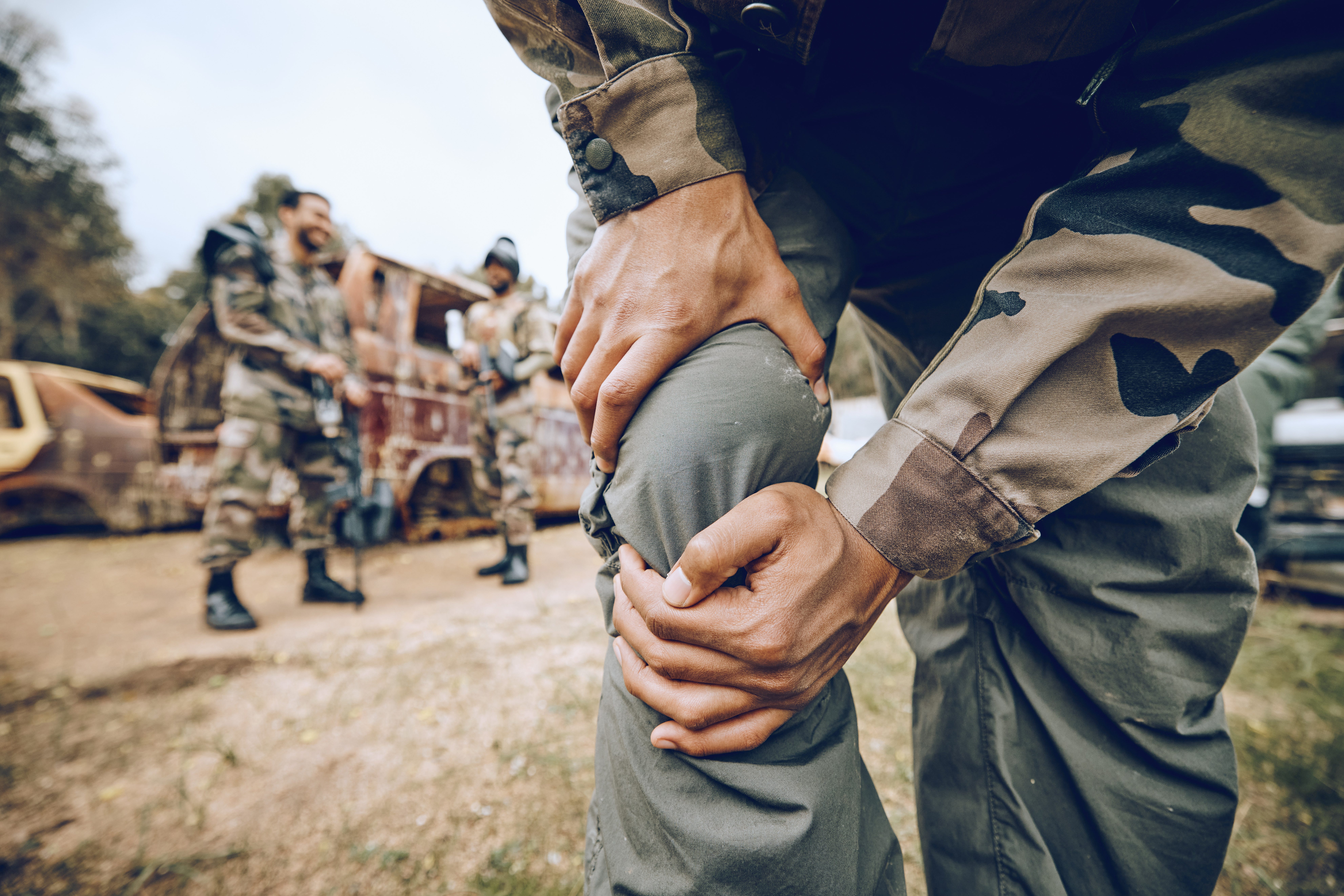
Under mission conditions, personnel operate under sustained external load within constrained environments that limit movement while increasing demands for stability and control. Load carriage, prolonged static positioning, and repeated high-intensity effort accelerate fatigue and increase reliance on compensatory strategies. As this occurs, the system loses its ability to transfer force efficiently, resulting in localized stress concentration and structural breakdown. This represents a predictable failure pathway.
Operational environments involving prolonged sitting, including console and cockpit roles, are primarily isometric in nature. Performance depends on maintaining position and structural integrity under sustained load, not on repeated dynamic movement. Continuous force production is required to prevent tissue deformation, preserve alignment, and maintain system stability over time.
Traditional dynamic training methods prioritize movement and velocity but do not adequately develop sustained force output under constrained conditions. In operational environments, the requirement is not repeated movement, but the ability to maintain force output over extended durations. When training does not reflect this demand, a gap emerges between physiological adaptation and operational requirement, resulting in reduced force sustainability and increased performance variability under fatigue.

Personnel attrition in military environments is driven in large part by preventable musculoskeletal breakdown, representing a critical failure in the system’s ability to tolerate sustained force. Musculoskeletal injuries sustained during basic training represent an early system failure that is often carried forward throughout a service member’s career, compounding reductions in force tolerance and increasing long-term risk of performance degradation and attrition.
Human system reliability is governed by four interdependent functions: the ability to generate force to meet task demands, tolerate that force over time without degradation, transfer force efficiently across the system, and express force with precision under constraint. These functions determine whether performance is maintained as fatigue accumulates and operational stress increases.
Isometric force development directly addresses this gap by improving the system’s ability to generate, tolerate, transfer, and express force under sustained tension. High levels of neuromuscular activation improve force generation, while continuous tension exposure enhances force tolerance and extends time-to-degradation under load. Maintaining joint position under load reinforces efficient force transfer, reducing localized stress concentrations, while the requirement to control force output under constraint improves force expression and stabilizes performance under fatigue.
These mechanisms produce measurable improvements in operational performance. Time-to-force degradation is extended, allowing sustained output under load. Variability in force expression under fatigue is reduced, improving consistency in task execution. Recovery time between repeated efforts is reduced, improving readiness across successive operational cycles.
The primary failure mode in the human system is the inability to tolerate, transfer, and express force under sustained stress. By directly targeting these functions, isometric force development reduces compensatory loading patterns, improves structural integrity, and stabilizes performance under fatigue. The result is a more predictable and reliable human system operating within high-stress environments.
Systems designed to deliver controlled, repeatable isometric loading at sufficient intensity and duration provide a practical means of implementing these adaptations at scale within operational settings. Isophit enables consistent, repeatable application of high-intensity isometric loading, directly improving force tolerance, force transfer, and performance reliability under operational stress.
At the system level, these improvements increase operational readiness, reduce performance variability, and lower attrition driven by musculoskeletal breakdown. Extending time-to-degradation preserves output during prolonged tasks, while improving recovery enhances mission sustainability. Each of these outcomes reflects a reduction in system-level failure risk.
Isometric force development improves the reliability of the human system under mission stress by directly enhancing its ability to generate, tolerate, transfer, and express force under operational conditions. These improvements align with known failure mechanisms and reduce the factors that degrade performance over time.
Mission success depends on system reliability. The human system remains the most variable component and the most susceptible to failure under sustained stress. Improving its ability to generate, tolerate, transfer, and express force is not a training preference. It is a system requirement.
At Isophit, we help the world’s strongest, fastest, and most dominant athletes—and everyday people—to win more, hurt less, and age stronger.
Learn more at www.isophit.com

As a DoW and DoD civilian for almost 20 years, I could not agree more. Innovation in Training and Readiness Support for our warfighters is much needed!